Yunnan's Four Tea Regions: Xishuangbanna, Pu'er, Lincang and Baoshan
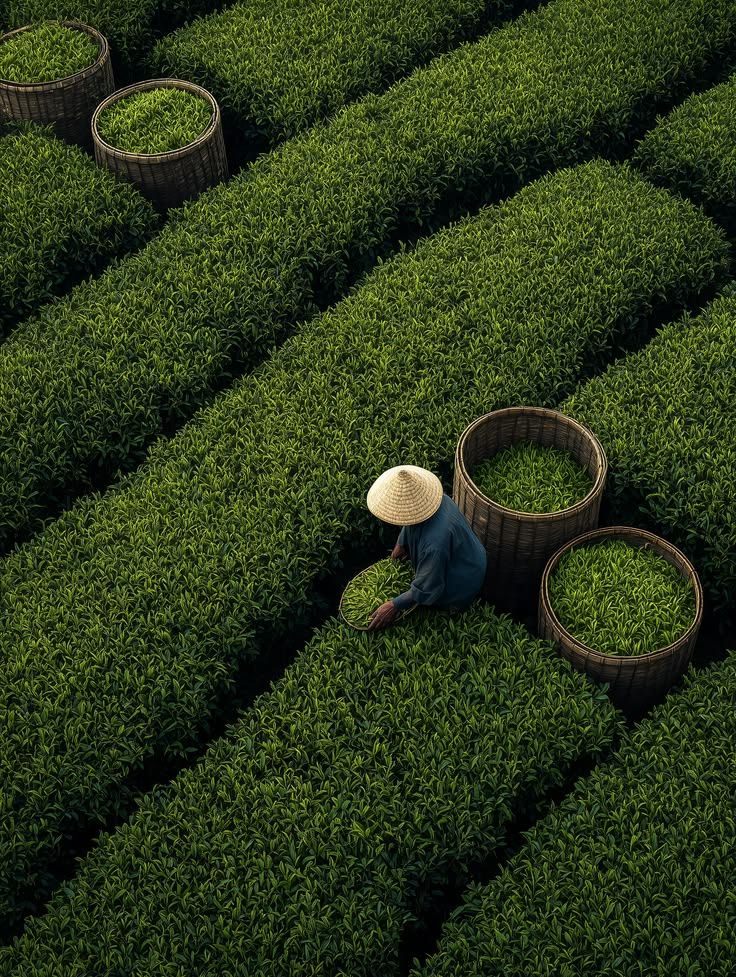
Yunnan's tea-growing map is commonly divided into four regions: Xishuangbanna, Pu'er, Lincang and Baoshan. This is a useful first filter, not four fixed flavour categories. Mountain, altitude, cultivar, harvest and processing all shape the cup.
Xishuangbanna includes Pasha, Banzhang, Nannuo, Yiwu and Manson. In our named lots, Menghai teas can show firmer structure, a clear shift from bitterness to sweetness and pronounced aroma, while Yiwu-area teas may be softer and more honeyed.
One example is Pasha New Village, grown at 1,800–1,940 m with floral-honey aroma, light bitterness and a cooling sweet finish.
Pu'er includes Jingmai, Jinggu and Kunlu Mountain. Jingmai lots are associated here with honey, fungal and forest-garden aromatics, while Jinggu also supplies Yunnan white tea. The processing category matters as much as the place name.
See the origin and format details for Jingmai Great Village in our catalogue.
Lincang includes Xigui, Bangdong, Bingdao, Yongde and Fengqing. Xigui is an instructive exception to simple altitude rules: its 750–950 m river-valley gardens can give rock-sugar sweetness and mineral coolness, while higher Bangdong lots are gentler and rounder. Fengqing is also an important Dian Hong origin.
Compare the documented profile of Lincang Xigui, including its tasting notes and specifications.
Baoshan, represented by producing areas such as Changning, makes red, green, Pu'er and white teas. Our current catalogue has no Baoshan lot, so we do not assign it a borrowed house flavour. Buyers should compare the exact category, origin and sample.
Use the four-region map to build a shortlist, then confirm the named mountain or village, harvest year, lot, format and sample. A regional name starts the comparison; it does not finish it.
Related reading: How to read a Yunnan ancient-tree tea label · Raw vs Ripe Pu-erh: what's the difference?
Frequently Asked Questions
What are Yunnan's four main tea regions?
Yunnan's tea-growing map is commonly divided into four regions: Xishuangbanna, Pu'er, Lincang and Baoshan. This is a useful first filter, not four fixed flavour categories. Mountain, altitude, cultivar, harvest and processing all shape the cup.
Does a tea region determine a fixed flavour?
Use the four-region map to build a shortlist, then confirm the named mountain or village, harvest year, lot, format and sample. A regional name starts the comparison; it does not finish it.
How should buyers compare teas from different Yunnan regions?
Baoshan, represented by producing areas such as Changning, makes red, green, Pu'er and white teas. Our current catalogue has no Baoshan lot, so we do not assign it a borrowed house flavour. Buyers should compare the exact category, origin and sample.