Does Rinsing Tea Remove Pesticide Residues? Is Tea Foam Harmful? Five Brewing Myths
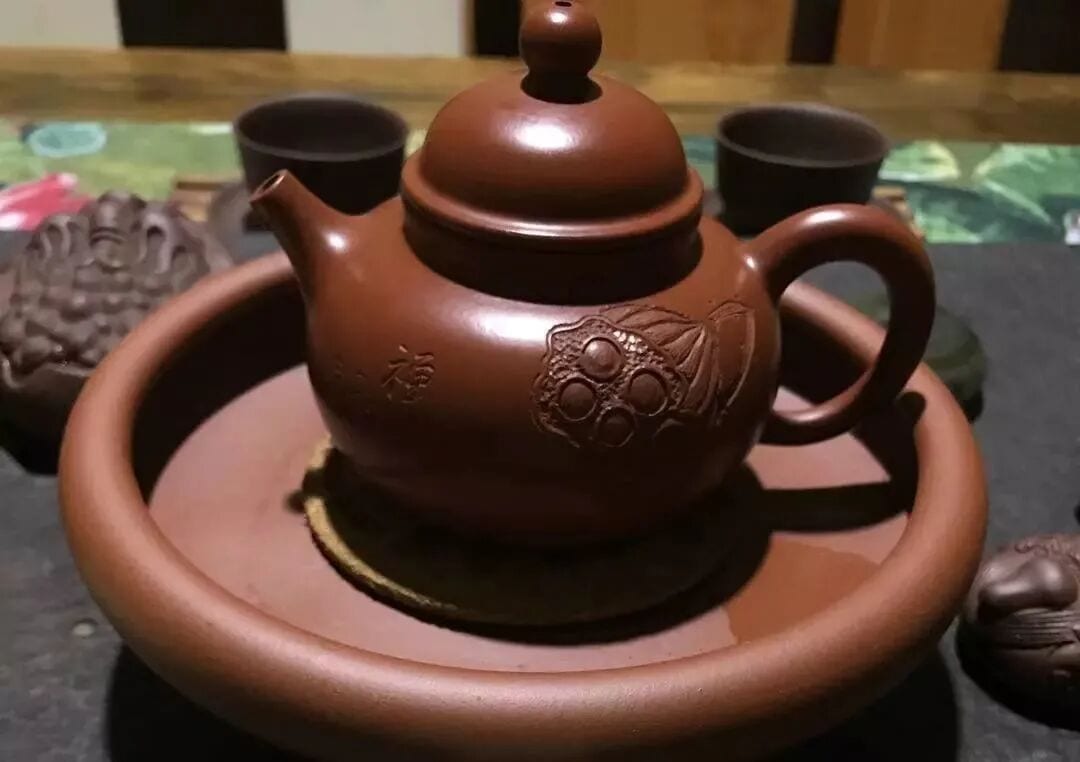
A short rinse removes only part of the water-soluble pesticide residues and cannot be treated as a safety step; the foam on a fresh infusion comes from the tea's own compounds; and questions about re-roasting, overnight tea and teaware depend on the tea and the vessel rather than on a universal rule.
| Common claim | Short answer | What actually decides it |
|---|---|---|
| Rinsing removes pesticide residues | Only partly | How water-soluble each compound is; residue safety is decided by the lot's test report, not by the rinse. |
| Foam on the tea means something is wrong | No | Foam comes from surface-active compounds in the leaf and varies by tea category and pouring force. |
| Aged tea must be re-roasted | It depends on the tea | Whether the category is roasted at all, and whether the batch has picked up damp or dulled aroma. |
| Overnight tea is good for seasoning a teapot | Not recommended | Seasoning comes from regular brewing and drying, while standing liquor leaves uneven stains and odour. |
| Green tea must never be brewed in a purple-clay pot | Not an absolute rule | Pot shape, wall thickness, volume and how fast you pour matter more than the material label. |
Does rinsing tea remove pesticide residues?
Only partly, and the amount depends on the compound. Published work on tea brewing shows that transfer from leaf to liquor is driven by water solubility: highly water-soluble pesticides can move into the infusion almost completely, while poorly soluble ones barely leach at all. A rinse before brewing was found to cut the residue risk in the infusion by roughly 5% to 59% depending on the pesticide, which means it reduces some residues and leaves others in the leaf. Residue safety is therefore established by testing the batch against the applicable limits, not by the first few seconds of water.
Research references: study on rinsing tea before brewing and pesticide residues and work on how physico-chemical properties drive residue transfer .
Is the foam on the surface of tea harmful?
No. The foam is formed by surface-active compounds that the leaf releases into hot water. A comparative study across the six tea categories measured foaming behaviour and found that it is not explained by tea saponin content alone; specific amino acids and catechins also contribute, and the categories differ from one another. In practice the amount of foam also changes with pouring height and force, leaf quantity and whether the tea is broken or whole. Skimming it off is a matter of habit and presentation, not of removing something unsafe.
Research reference: comparative study of tea foam across six tea categories .
Does aged tea have to be re-roasted?
No, and for several categories it should not be. Re-roasting is a corrective step used mainly for roasted styles such as Wuyi rock tea or roasted Tieguanyin when a batch has absorbed moisture or lost definition in its aroma. Sun-dried categories such as Yunnan raw Pu-erh and white tea are not built around roasting at all, and heating them to refresh a dull cup changes the product rather than restoring it. Decide from the tea's own process and the condition of the batch: if the dry leaf smells damp or flat, fix the storage first and ask the producer whether a re-roast belongs to that style.
Can you use overnight tea to season a teapot?
It is not a good way to season one. Seasoning happens through ordinary use: brewing, rinsing the pot with hot water and letting it dry fully, so that the surface develops an even sheen over time. Liquor left standing in or on the pot dries unevenly, leaves visible stains in the shape of the pool and can hold a stale smell that later shows up in light teas. Leftover liquor standing at room temperature is also not a clean starting point for a vessel you drink from. Empty the pot after a session, rinse it with hot water and let it air-dry without a lid seal.
Is green tea unsuitable for a purple-clay teapot?
Not as an absolute rule. The usual concern is real: a thick-walled, small-mouthed clay pot holds heat, so tender green tea can over-steep and taste dull or cooked if the leaf sits in hot water. That is a heat and timing problem, not a ban on the material. A wide-mouthed, thin-walled pot with a quick pour, a lower water temperature and a short steep can work, while a glass or porcelain gaiwan remains easier to control and lets you watch the leaf. Choose the vessel by how fast you can separate liquor from leaf, then adjust water temperature and steeping time to the tea.
Related reading: five tea quality myths, the difference between raw and ripe Pu-erh, and the current tea catalogue.
Also in this series: how Chinese tea categories are decided by processing.
Frequently Asked Questions
Should I rinse tea before brewing?
A rinse is useful for wetting compressed or tightly rolled leaf and for warming the vessel. It removes only part of the water-soluble residues, so treat it as a brewing step and rely on the batch test report for residue safety.
Why does my tea have foam on top?
Surface-active compounds released by the leaf create foam in hot water, and the amount varies with the tea category, the leaf condition and how forcefully you pour. It is a normal property of a fresh infusion.
Can green tea be brewed in a purple-clay teapot?
Yes, if the pot lets you pour quickly and you use a lower water temperature and a short steep. A heat-retaining pot with a slow pour tends to over-extract tender green tea, which is why a gaiwan or glass is easier to control.