What Are the Characteristics of Ancient-Tree Pu-erh? Reading Origin, Flavor and Infusion Performance
Ancient-tree Pu-erh is commonly assessed through documented origin, garden setting, aroma, liquor texture, returning sweetness and performance across infusions. The term ancient tree is not a quality guarantee; origin, lot and a representative sample still need to agree.
Ancient tea trees and ancient-tree Pu-erh are not the same thing
Yunnan's ancient tea tree investigation rules include tea trees at least 100 years old, or with a trunk diameter of at least 15 cm measured 10 cm above the ground. This is a resource-registration threshold. A finished tea labelled ancient tree still needs traceable origin, harvest and production-lot information; the wording on its own does not show which registered trees supplied the leaf.
Where the value of ancient-tree Pu-erh actually comes from
1. Ecology and pesticide residues
Old trees in mixed forest often grow with far less intervention than a managed plantation, and growers in those gardens usually have little reason to spray. That is a reasonable expectation, not a measurement. "Zero residue" is a laboratory result about one batch, not a property of tree age, so treat ecology as background and ask for the third-party residue report issued for the lot you are buying.
2. Growing conditions and what ends up in the cup
Ancient-tree Pu-erh is commonly assessed through documented origin, garden setting, aroma, liquor texture, returning sweetness and performance across infusions. The term ancient tree is not a quality guarantee; origin, lot and a representative sample still need to agree.
3. What to record when you taste
Ancient-tree Pu-erh is commonly assessed through documented origin, garden setting, aroma, liquor texture, returning sweetness and performance across infusions. The term ancient tree is not a quality guarantee; origin, lot and a representative sample still need to agree.
4. Why the volume is limited
A single old garden yields what it yields. Trees are scattered across steep ground, picking is slow, and most gardens are harvested mainly in spring with a smaller autumn pick in some years. That is why single-village and single-tree lots sell out and why two years from the same garden are never identical quantities. Scarcity explains availability and price pressure; it says nothing about whether a particular lot tastes good.
5. Storage and how the tea changes
Raw Pu-erh continues to change after production, and buyers often describe ancient-tree material as developing well. What governs that is storage: temperature, humidity, ventilation and freedom from odours, plus the condition of the batch when it was packed. Keep this as a storage question with conditions attached. Future value is a market forecast, not a product specification, and no producer can promise it.
How to tell ancient-tree Pu-erh apart
Big, thick leaves do not prove ancient-tree material
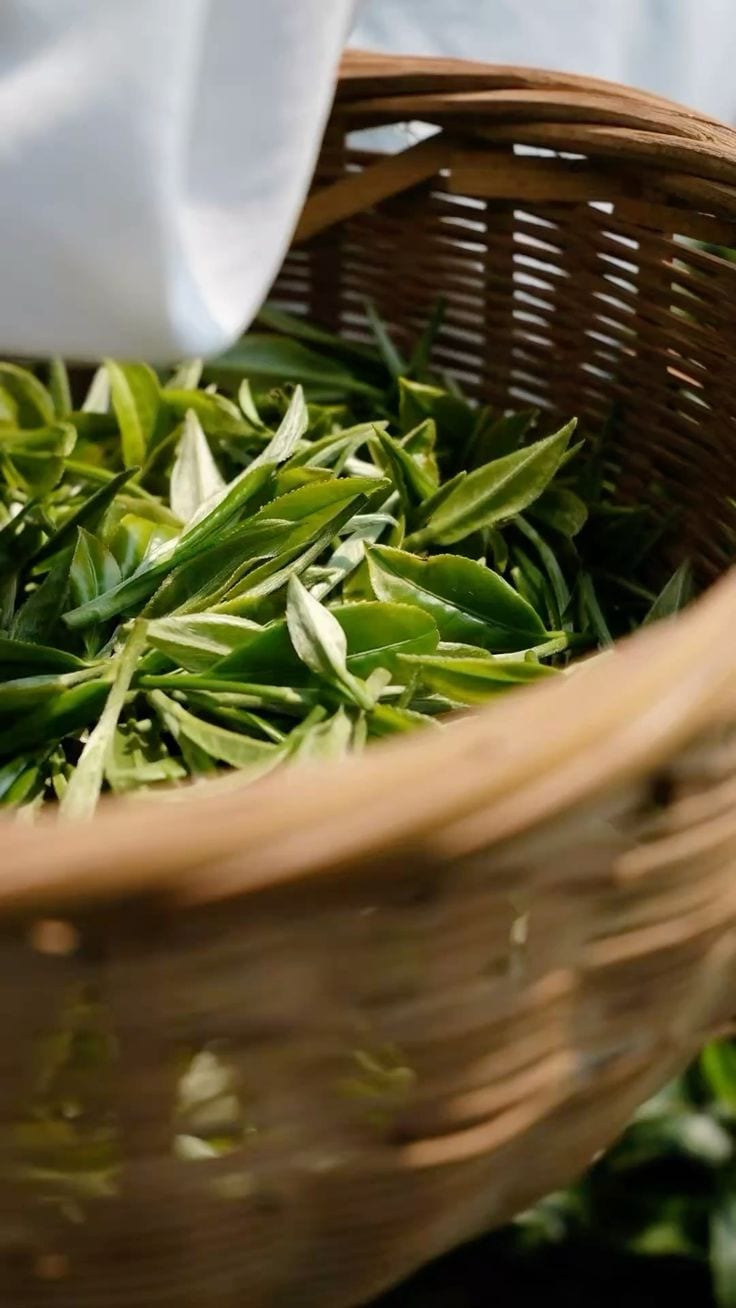
Judging a lot by the size or thickness of the wet leaf is the most common mistake. Leaf dimensions follow the cultivar — large-leaf and small-leaf varieties, thick-leaf and thin-leaf types — and the picking standard, not the age of the tree. Plantation material from a large-leaf cultivar, rolled lightly so the strands stay loose and open, produces exactly the big, impressive leaf base that buyers read as ancient-tree. Appearance is a description of the cultivar and the processing, not a certificate.
Liquor colour, texture and throat feel

These are real sensations and worth recording, but they are not acceptance criteria. Returning sweetness, salivation and the cooling feeling in the throat vary with the taster, the water, the leaf quantity and the session. Note them in your own tasting record and compare them across teas brewed the same way; do not accept a supplier's claim of a fixed number of minutes or infusions as evidence. What a buyer can hold a supplier to is the written origin, the harvest, the lot reference and whether the shipment matches the approved sample.
What can actually be verified
| Information | What it can tell you | What it cannot prove alone |
|---|---|---|
| Tree age or trunk diameter | A recorded basis for describing the source trees | Finished-tea quality or exact origin without traceability |
| Named mountain or village | The declared geographic source | Authenticity without lot and supplier records |
| Harvest year and production lot | Which batch the sample and shipment should match | Flavor without tasting the representative sample |
| Tasting notes | Observed aroma, liquor and aftertaste for one sample | That every later shipment will taste identical |
| Fixed infusion or investment promise | A seller's stated claim | Ancient-tree identity, future flavor or financial value |
| Leaf size and thickness of the wet leaf | Cannot prove tree age on its own | Ask for the cultivar, picking standard and rolling style, then compare with the lot record. |
| Throat feel and length of returning sweetness | A tasting observation, not a specification | Record it in your own session notes under fixed brewing conditions; it is not an acceptance criterion. |
Why buyers should match the lot and sample
Before an order, record the mountain or village, raw or ripe process, harvest season, year, production lot, format and net weight. The approved sample should correspond to the supplied lot. Use the ancient-tree label guide to check written fields, compare raw and ripe Pu-erh, review the Yunnan four tea regions guide, and see available formats in the product catalogue.
For wholesale selection, treat ancient tree as one source description rather than a final grade. Written origin and lot records, a representative sample and agreed specifications provide a firmer basis for comparison.
Frequently Asked Questions
Does greater tree age always mean better Pu-erh?
No. Tree age is one source description. Origin, season, processing, storage and production lot also affect the finished tea, so buyers should judge the records and sample together.
Can infusion endurance prove that a tea is ancient-tree tea?
No. Leaf amount, vessel, water, steeping time, processing and storage all affect the number of infusions. Endurance is useful tasting evidence, but it cannot verify tree age or origin by itself.
Can both raw and ripe Pu-erh use ancient-tree material?
Yes. Raw and ripe describe processing routes, while ancient tree describes the source trees. Either category may use ancient-tree material when the origin and production lot are documented.